


State Line Investment Doubles Foundry’s Throughput – Customers Benefit from Turnaround Times, Increased Capacity
“Vintage” is fine if you’re shopping for a muscle car. But an aging electric panel that controls electric induction melting furnaces is not quite as appealing as a late 60’s Chevrolet Camaro.
“The panel was vintage, from the mid-1990s and past its expected lifespan,” says Jesse Milks, president of State Line Foundries – which includes Winnebago Foundry, where the panel was used to heat its iron-melting furnaces. “We were spending heavily on parts and service and knew the panel was on borrowed time.”
Downtime had been kept to a minimum with ample spare parts on hand, but the panel’s reliability was questionable, and more shutdowns were inevitable. If shutdowns were to happen, customers would ultimately feel the impact as the Winnebago team would fall behind on orders.
“We had to make a decision,” Milks explains. “The electric panel could have had a catastrophic failure – and no doubt it would have been at the worst possible time. It’s like having a 30-year-old furnace in your home that goes out on the coldest or hottest day of the year. Do you wait for the catastrophic failure to happen, or do you plan ahead by replacing it before failure happens?
The State Line team knew it was time to replace the aging electrical system. But rather than simply swap out what was there, the project presented an opportunity to make a significant improvement to the foundry’s operation.
Time for an upgrade
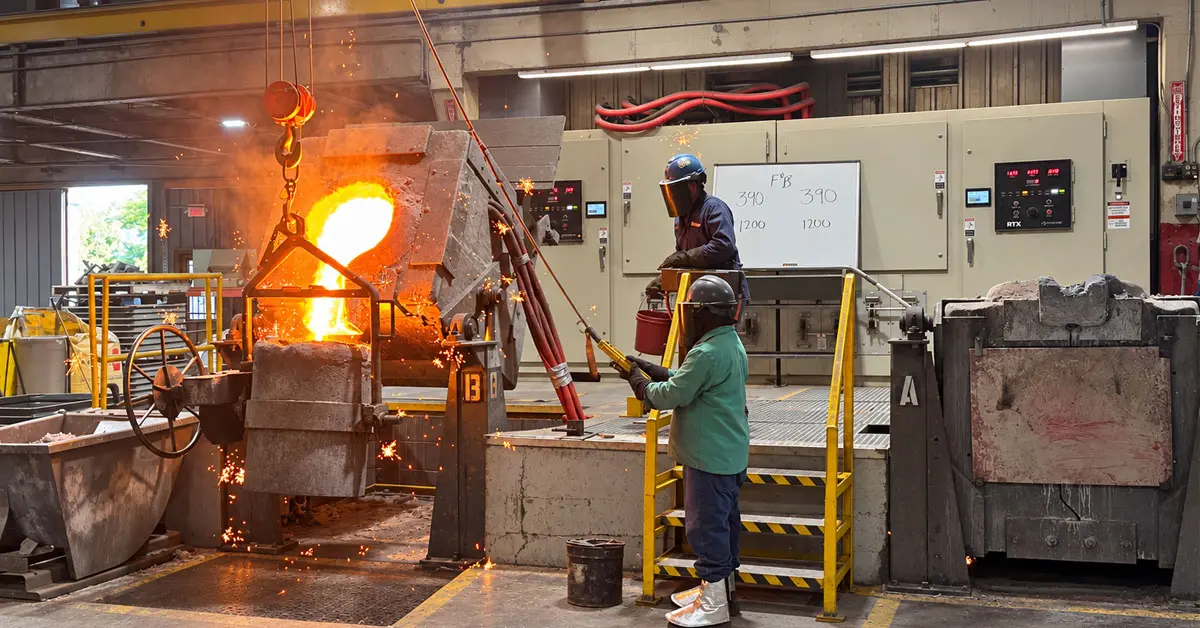
Winnebago Foundry has two induction furnaces, which melt the iron used in production, but had only one electrical panel to power them.
“We could load up the two furnaces but only direct the power to one furnace at a time,” Milks clarifies. “It was like having two pots of water to boil – with only one stove burner.”
That limitation made melting iron the most significant bottleneck at the foundry. The solution was to remove the aging panel and install two new panels – one dedicated to each furnace.
“Two panels are better than one – and two new panels are considerably better yet,” Milks offers.
The new configuration allows both furnaces to operate simultaneously, effectively doubling melting capacity while providing a safeguard against a complete shutdown.
“Two panels gives us a nice insurance policy,” Milks says. “If we have to perform maintenance, we can still run the one furnace. With the previous system, we would have had to shut down the entire foundry to fix it.”
The new system required a significant commitment of time and money. It also delivered benefits well beyond avoiding an equipment failure. The upgrade has improved throughput, reliability, energy efficiency and labor utilization – ultimately creating a more responsive operation for customers.
A commitment to Winnebago
The electric panel project marks the largest investment at the Winnebago foundry in decades – perhaps ever, Milks says. But the expenditure represents more than new equipment. It reflects State Line’s commitment to the future of the facility.
“We will continue to invest in this plant – continue to grow and prepare for the next 20 years,” Milks details. “We are actively making improvements to better serve our customers.”
Added efficiency
The modern electric panels are appreciably more energy efficient. The increased melting capacity also means fewer hours are required from the employees who operate the furnaces.
Previously, the melt shift ran from 3 a.m. until about midnight. With the new system, the hours are approximately 6 a.m. to 5 p.m., effectively reducing the hours by nearly half.
“We are able to reallocate some workers to other bottleneck areas for even quicker throughput that will benefit our customers,” Milks says.
The result is a more efficient operation from both an equipment and workforce perspective.
Confidence in the crew
The project gave Milks a renewed appreciation for Winnebago’s maintenance team.
“It proves our skilled maintenance crew has the ability to tackle a project like this,” he states. “We never doubted it, but it was really something to see them deliver. It was a once-in-a-career type of project for most of them. It was the type of project they probably won’t see again, and they accomplished something special.”
Early dividends
The benefits of the upgrade are already evident in major projects.
“We recently had a waterworks project with 13 new part numbers and all new patterns,” Milks says. “It was a large project and it went off seamlessly – in part because of the reduced bottleneck at the iron-melting step of the process.”
For Winnebago, the decision to replace an aging electrical system became an opportunity to rethink how the foundry operates. What began as a necessary equipment replacement ultimately delivered greater capacity, improved reliability, increased efficiency and a solid foundation for future customer growth.
“I expected improvement, but even I’m impressed by how dramatically operations have improved since the new panels allow us to use both burners at the same time,” Milks reflects.
Carefully considered investments like this are just one of the reasons State Line Foundries is positioned to provide outstanding service to its customers for years to come.
Share
Join our eNewsletter
Get game changing insights and analysis. Monthly.


